Client Accountability for Dietitians: A Practical Tracking Workflow
By FinalWork · · 6 min read
A diet plan can be carefully designed, clearly explained, and still become difficult to discuss two weeks later. The missing piece is often not another document. It is a lightweight record of what happened between appointments: which actions were completed, where the client struggled, what note they left, and how consistently they followed a time-based activity.
Client accountability software for dietitians should make that interval easier to understand without pretending to be an electronic health record, diagnostic tool, or appointment platform. Its job is narrower: turn agreed actions into a visible routine and give both practitioner and client a shared starting point for the next conversation.
Why sending a plan is not the same as following it
A PDF, printed sheet, or message tells the client what was agreed. It does not show whether an item was understood, attempted, skipped, or changed in practice. By the next session, both people may be reconstructing the week from memory, and memory tends to compress several different days into one general impression.
A task-based workflow keeps each action close to its completion status and note. The dietitian can see patterns before the appointment, while the client has a clearer daily list. This does not turn a tick into clinical evidence; it simply preserves useful context that would otherwise disappear into a chat thread.
Build the plan around different rhythms
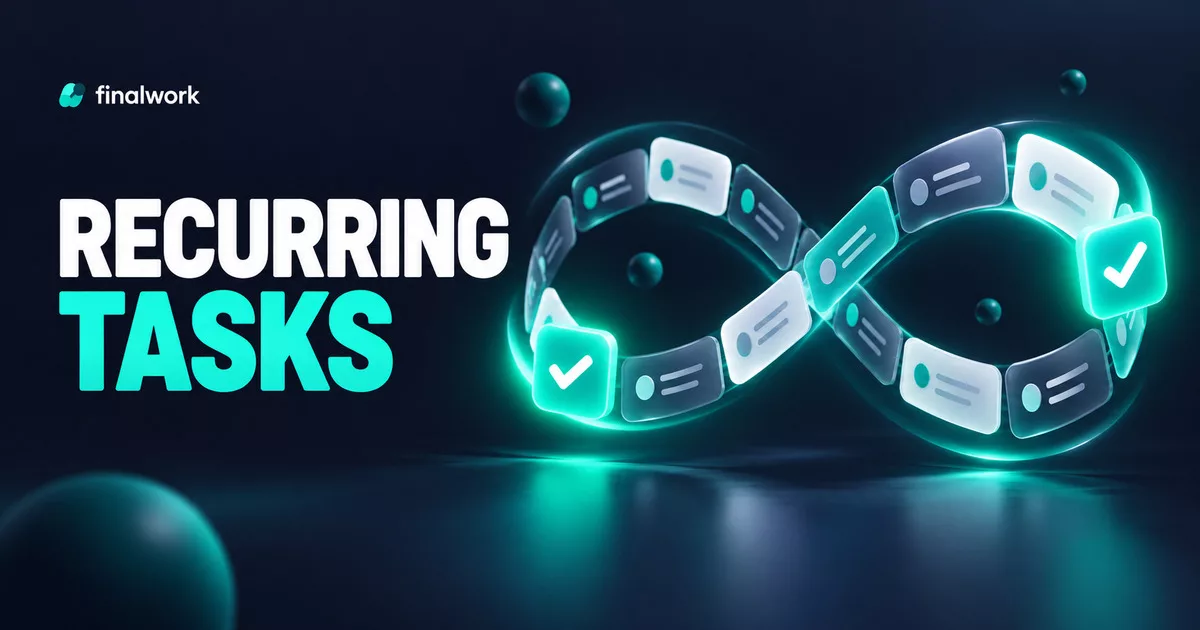
Not every action belongs on a daily checklist. Hydration or a meal routine may repeat each day, preparation work may happen weekly, and obtaining a resource may be a one-time item. A useful system separates those rhythms so the list stays relevant rather than becoming a wall of recurring reminders.
- Daily actions: Small behaviours that need a fresh completion opportunity each day.
- Weekly actions: Preparation, review, or measurement activities tied to a chosen day.
- Monthly actions: Longer-cycle items that should not clutter the daily view.
- One-time tasks: Specific next steps to complete before the following appointment.
- Client notes: Context about what happened, what felt difficult, or why an action was not completed.
Keep the first version deliberately small. A client is more likely to understand five precise items than twenty overlapping instructions. The pilot should test whether the wording, recurrence, and reminder time match real life, not whether the software can hold a long list.
Use incomplete items as questions, not verdicts
An unticked task has several possible meanings. The client may have forgotten, misunderstood the wording, decided it was not practical, or completed the action without opening the app. Treating all four situations as the same failure creates a poor conversation and weakens the value of the record.
A short note adds the missing layer. The client can record where they struggled while the detail is recent. The dietitian can then ask a focused follow-up question instead of starting with a broad request to remember the entire week. The record supports professional judgment; it does not replace it.
What exercise time can and cannot tell you
For a time-based activity, a start and finish timer can capture duration more consistently than a later estimate. If the client takes a break, separating break time from net time makes the record easier to read. The number still does not prove intensity, technique, or clinical suitability.
Review duration as a pattern rather than a score. A weekly or custom-date report may show which days supported the routine and which did not. The useful question is not simply whether the total increased, but whether the agreed activity fitted the client’s week and what should change next.
A focused FinalWork setup for a nutrition practice
In the FinalWork workspace for dietitians and clients, the practitioner can create daily, weekly, monthly, and one-time items. Clients tick their own list and can leave a note under an item. Reminder times can be set for work that remains incomplete, subject to notification permission on the client’s device.
For an exercise session, the client can start and stop a timer and record breaks separately. The practitioner can review daily, weekly, monthly, or custom-range reports and export a PDF when a portable summary is useful. Selected events can also be surfaced through Telegram notifications.
This workflow should not be used as a substitute for clinical documentation, consent procedures, or any regulated record system required by the practice. Keep the operational list proportionate, avoid unnecessary sensitive detail, and decide separately where health information belongs.
A seven-day implementation test
- Choose one client who understands that the week is a workflow test.
- Translate the agreed plan into no more than five clearly worded actions.
- Assign the correct daily, weekly, or one-time recurrence to each item.
- Demonstrate completion, notes, and the exercise timer with one sample action.
- Set reminders around the client’s real routine rather than an arbitrary office hour.
- Check notification permission before assuming a missed reminder was sent.
- Review the report together and rewrite any item that produced confusion.
Measure the pilot by clarity, not perfect compliance. Did the client know what to do? Could they explain an obstacle close to the moment it occurred? Could the dietitian prepare for the next appointment without searching several message threads? Those outcomes show whether the workflow is useful.
Questions to ask before choosing a tracking tool
A short product trial should answer practical questions. Can the client complete an item without help? Can recurring and one-time work be separated? Is the client’s note visible to the practitioner? Can a useful date range be reviewed without exporting several files? Are reminders configurable, and can missing notification permission be detected?
Also look for boundaries. A task tracker should not be marketed as a nutrition analysis engine, medical record, billing tool, or scheduling system unless those capabilities are explicitly provided. A focused product can still be valuable when its role in the practice is clearly defined.
Frequently asked questions
Is FinalWork a diet-planning or EHR platform?
No. In this workflow, FinalWork organises tasks, client notes, time records, reminders, and reports. The dietitian still uses the appropriate professional systems and judgment for clinical assessment and records.
Can a client see a fresh list each day?
Daily items can reopen according to the configured reset schedule. Weekly and monthly items follow their own chosen days, while one-time tasks remain specific to a single next step.
Does a reminder guarantee that an action will be completed?
No. A reminder can surface an unfinished item, but it cannot create motivation or resolve an impractical plan. Notification delivery also depends on the client granting permission on their device.
Start with one week of observable work
The best client accountability workflow is small enough to use and specific enough to discuss. Recurring actions, timely notes, an optional activity timer, and a readable report can make the space between appointments less dependent on memory.
To evaluate that approach, create a FinalWork workspace and run a seven-day pilot with one client. Keep the list short, review the record together, and expand only after the workflow proves useful in a real appointment.
Manage your team with FinalWork
Time tracking, task management and reports in one app. Completely free.
More posts

Logistics Workforce Tracking Software: A Buyer’s Checklist
A buyer’s checklist for work status, recurring depot checks, field notes, location boundaries, and multi-site logistics teams.
7 min read
Read more
Restaurant Shift Handoff Checklist: Keep the Next Service Ready
A practical shift handoff system for transferring open tasks, concise exception notes, and crew status before the next restaurant service.
7 min read
Read more
Construction Crew Time Tracking Software: A Practical Site Workflow
A one-site workflow for recording crew time, breaks, recurring checks, and exception notes without replacing payroll or full construction management systems.
8 min read
Read more